
Hard Water & Water Spot Removal in Fort Collins, CO
Northern Colorado water is mineral-heavy, the air is dry, and the sun is intense. That combination is close to a worst case for water spotting. Water lands on paint, the liquid evaporates fast in the dry air, and the dissolved calcium and magnesium are left behind as a concentrated deposit — then the sun bakes it.
The single most important thing to understand before you pay anyone to fix water spots is that there are two completely different problems here, and they cost very different amounts.
Type 1: Surface mineral deposits
This is mineral scale sitting on top of your clear coat. It looks like white or gray rings and speckles. Run a fingernail across it and you can feel texture.
This comes off. Mineral deposits are alkaline, so they are dissolved with an acidic treatment, and depending on severity may need clay decontamination or a light polish afterward. It is a relatively quick, relatively inexpensive job.
If your spots are recent — a few weeks of sprinkler overspray, a rain event, a wash that dried in the sun — this is almost certainly what you have.
Type 2: Etched clear coat
This is the one people don't expect. If a mineral deposit sits on paint long enough, in enough heat, it does not just stay on the surface. The minerals concentrate, become chemically aggressive, and eat a crater into the clear coat. The white ring you are looking at is not a deposit anymore. It is a physical depression in your paint where clear coat used to be.
No chemical removes etching, because there is nothing sitting there to remove. The only fix is to level the surrounding clear coat down to the bottom of the etch — which is machine polishing, or in deep cases compounding. That is paint correction, and it is priced accordingly.
Etching also has a hard limit. Clear coat is only so thick. If the etch is deeper than the clear you can safely remove, it cannot be fully corrected, and the honest answer is that it will improve but not disappear. Anyone who tells you otherwise is either going to burn through your clear coat or disappoint you.
How we tell the difference
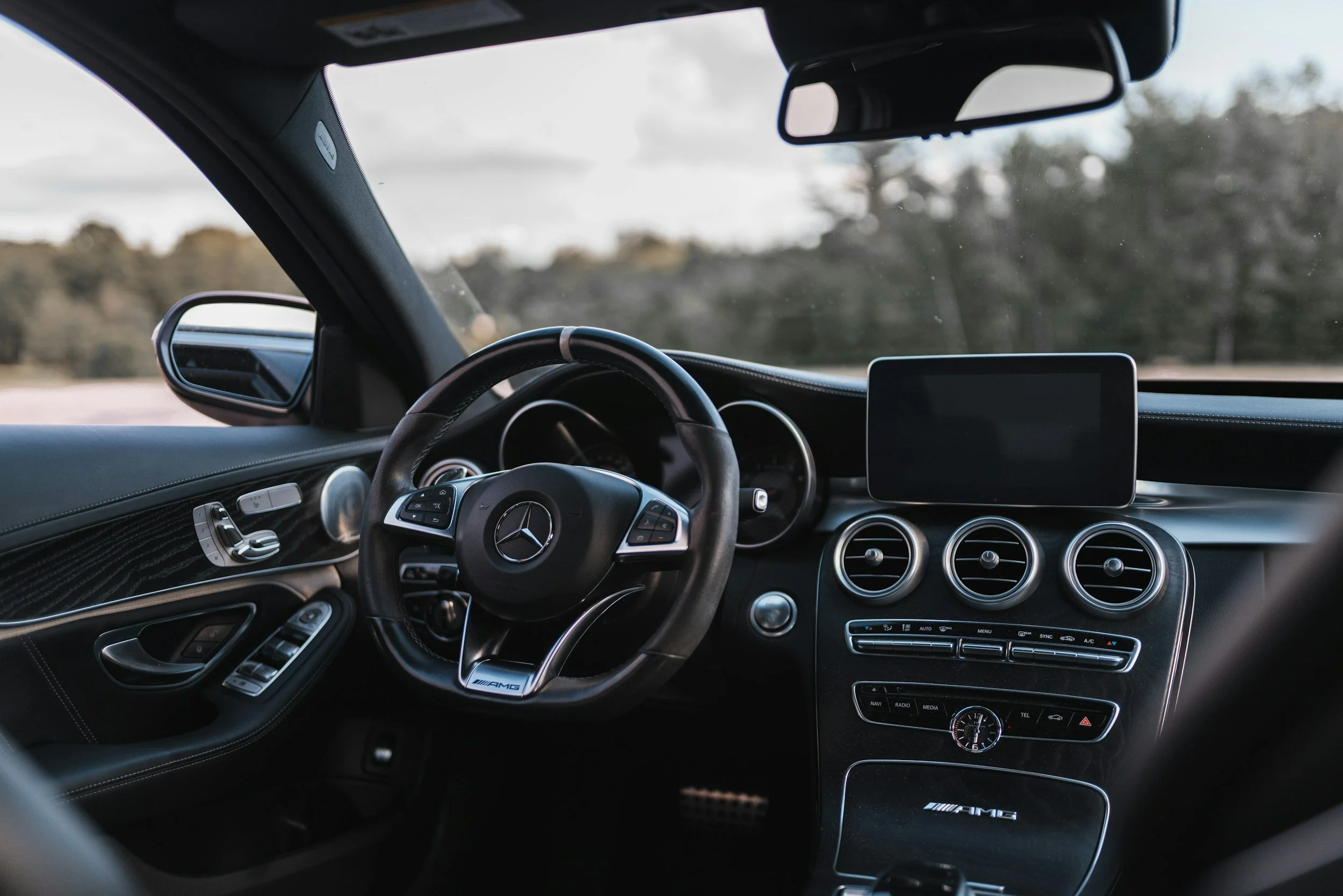
We assess before we quote. Deposits have texture you can feel and they respond immediately to an acidic test spot. Etching feels smooth, does not respond to chemical treatment, and shows up as a defined depression under inspection lighting.
We will tell you which one you have, and if you have both — which is common, because the deposits on your horizontal panels are usually newer than the etching on your hood — we will tell you what each part costs.
The sprinkler problem
This is the most common cause we see in Fort Collins, Loveland and Windsor. An irrigation head that catches the side of a car parked in a driveway, or an HOA system that hits the row of cars along a street, is hitting that paint with untreated well or municipal water two or three times a week, all summer, on a hot panel.
That is a spotting cycle repeated a hundred times a season, and it is why cars that live in the same parking spot develop spots on only one side. If you can move the car or adjust the head, that is worth more than any detail we can sell you.
The other repeat offenders here: automatic car washes that blow-dry inadequately, washing in direct sun so the panel is hot and water flashes off before you can dry it, and rain following a dusty period, which lands mineral-laden dust and then dries.
Glass is often worse than paint
Hard water etching on glass is extremely common and frequently ignored. It shows as a hazy film that you notice most when driving into low sun, and it does not come off with glass cleaner. Windshields catch it from wipers dragging mineral-laden water across, and side windows catch it from sprinklers.
Glass is harder than clear coat, so light deposits polish off. Heavier etching on glass needs dedicated glass polishing, which we can do — and it makes a bigger difference to night driving safety than most people realize.
Water spots on wheels, particularly polished or chrome finishes, are also common and need finish-appropriate treatment.
Keeping it from happening again
Dry your vehicle. The whole cause is water being allowed to evaporate on paint. Drying immediately after a wash eliminates most spotting.
Don't wash in direct sun. Hot paint flash-dries water before you can get to it.
Move the car out of the sprinklers. Genuinely the highest-value fix.
Consider a ceramic coating. A coating does not make your car spot-proof — minerals still deposit. What it does is prevent those minerals from bonding to and etching your clear coat, so they rinse off instead of becoming permanent. On a vehicle that lives outside in Colorado, this is the difference between an annual wash-off and an annual paint correction.
Frequently Asked Questions
-
Surface mineral deposits, yes, essentially always. Etched clear coat improves with polishing but can only be corrected as far as the remaining clear coat safely allows. Deep etching cannot be fully removed.
-
Feel it. Deposits have texture; etching feels smooth because it is a depression rather than a coating. We will confirm it in person before quoting.
-
Almost always a sprinkler. Cars parked in the same orientation get hit repeatedly on the same side.
-
Yes. Light deposits polish off; heavier glass etching needs dedicated glass polishing. It makes a real difference driving into sun or at night.
-
It prevents the etching, which is the expensive part. Minerals will still deposit on the surface, but they release instead of bonding into the clear coat.