
Wildfire Ash & Smoke Removal in Fort Collins, CO
If ash has settled on your vehicle, the most important thing to know is this: do not wipe it off.
That instinct — grab a towel, clear the windshield, brush off the hood — is how a cleanable problem becomes a paint correction bill. Wildfire ash is abrasive and chemically aggressive, and both problems get worse the moment you drag it across your clear coat.
What wildfire ash actually is
Ash from a wildfire is not soft like cigarette ash. It is a mix of incompletely combusted mineral and organic material, and it contains hard, angular silica particles. Under a towel, that is fine sandpaper.
It is also strongly alkaline. Ash contains calcium and potassium oxides and hydroxides, and when it gets wet — dew overnight, a light rain, or you spraying it with a hose — it forms a caustic solution sitting directly on your clear coat.
That solution etches. Given enough time and heat, alkaline ash leaves permanent depressions in paint, hazes glass, and stains chrome and polished aluminum. It also pits and discolors bare aluminum.
Ash is worse on horizontal surfaces because it settles and stays: hood, roof, trunk, and the tops of mirrors.
The two ways people damage their own car
Dry wiping. Dragging angular silica across paint under any pressure creates a field of fine scratches. On a dark car it looks like the paint has been scoured. This is by far the most common wildfire-related paint damage we see, and it is entirely self-inflicted.
Rinsing with a hose and calling it done. Water activates the alkalinity. If you wet the ash and it sits — because you rinsed it and went inside, or because you didn't get all of it — you have created a caustic slurry and left it on the paint. This does more damage than the dry ash would have.
If ash lands on your vehicle and you can't get it professionally handled quickly, the least harmful thing you can do is get it under cover and leave it alone. Do not wipe. Do not spray it and walk away.
How we remove it safely
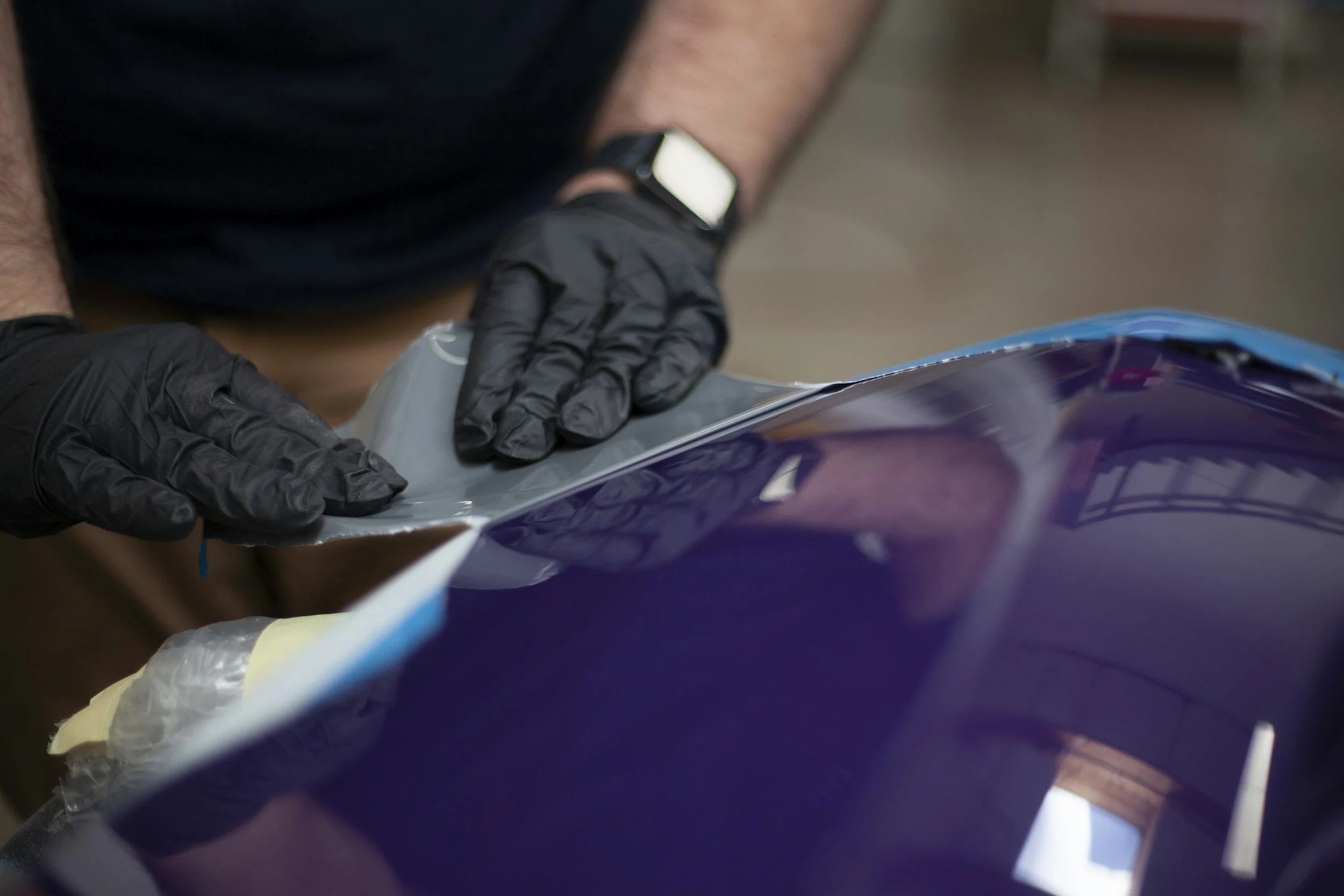
Pre-rinse with high volume and low contact. The principle is to float the ash off rather than move it across the surface. Large volumes of water, no pressure at close range, no towel contact until the abrasive material is gone.
pH-correcting wash. Because ash is alkaline, a normal pH-neutral shampoo isn't ideal. We use chemistry that neutralizes the alkalinity while lifting residue, so the caustic reaction stops rather than being diluted and smeared.
Multiple wash stages, contact-free where possible. Foam, dwell, rinse, repeat — removing as much as possible before anything physically touches the paint.
Decontamination. After washing, embedded particulate is removed chemically and with clay media rather than abrasively.
Assessment and correction. Then we look at what the ash left. Light exposure caught early: often nothing. Ash that sat through rain and sun: etching that needs machine polishing. Ash that was wiped: swirls and scratches that need correction. We will show you what we find in proper lighting.
Wheels, glass and trim. Ash hazes glass and stains polished and chrome surfaces. Each gets appropriate treatment.
The engine bay and the cowl. Ash gets pulled in through the cowl and grille and packs around the air intake and radiator. Worth cleaning out, and the cowl drains matter — packed ash plugs them, which causes water intrusion into the interior later.
The interior side: smoke odor and ash intrusion
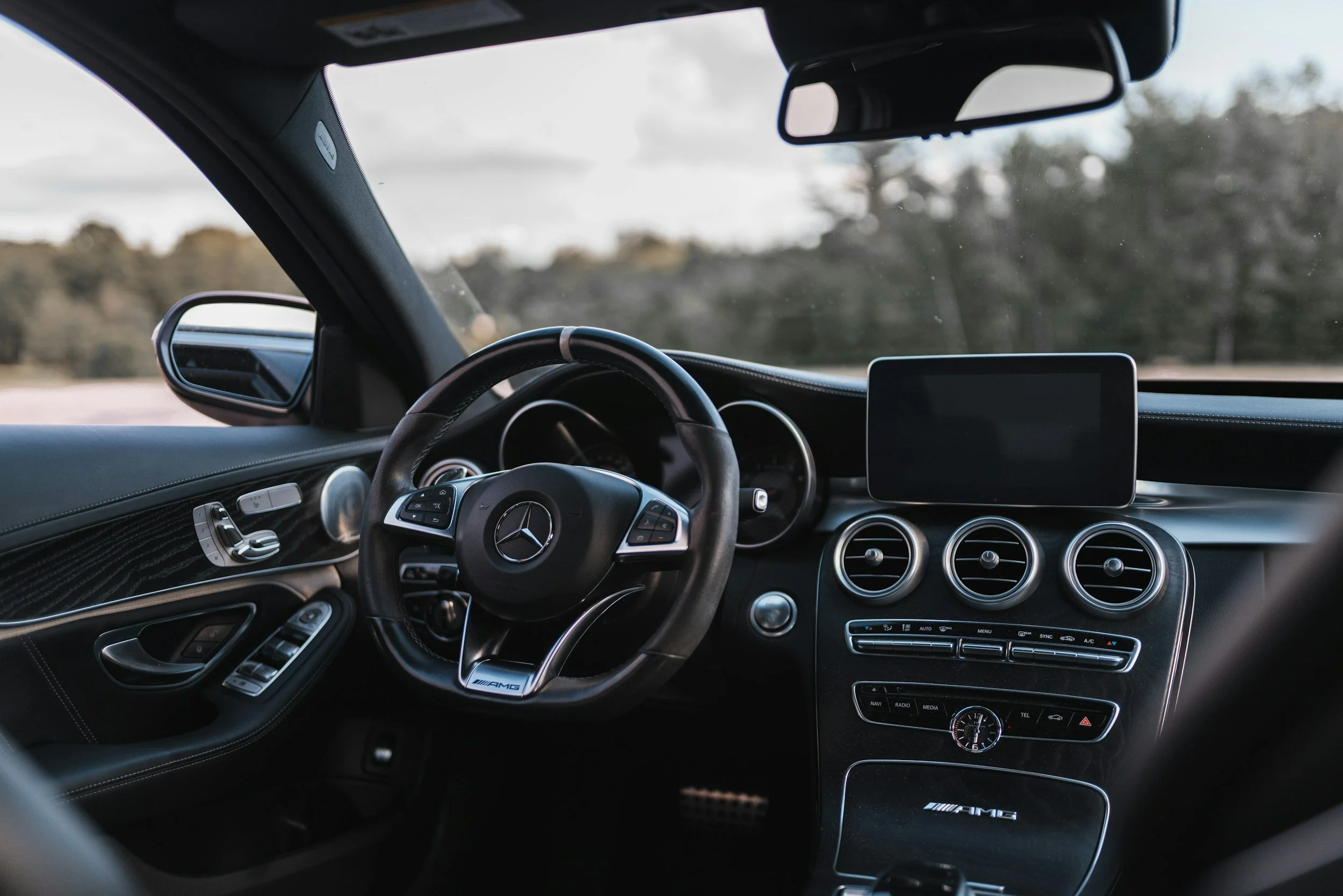
Vehicles don't seal against smoke. During a significant fire event, smoke gets into the cabin through the ventilation system and around door seals, and it saturates the absorbent surfaces — headliner, carpet, seat foam, and the HVAC evaporator.
The cabin air filter is the first thing. It loads up with ash and fine particulate, and it will keep pushing that into the cabin every time you run the fan. Replacing it is the single most effective interior step.
HVAC and duct treatment. Ash and smoke residue in the evaporator and ductwork is why the smell returns whenever the AC comes on.
Extraction on carpet and upholstery to pull particulate out of the fibers rather than leaving it to circulate.
Headliner attention — it is the largest absorbent surface in the cabin and it holds smoke odor, which is why odor treatments fail when it's skipped.
Ozone or hydroxyl treatment after the source material is dealt with.
Timing and insurance
Speed matters more here than almost anywhere else. Ash that is removed before the first rain or heavy dew usually leaves nothing behind. Ash that goes through a wet-dry cycle in the sun etches. If there has been a fire and your vehicle has ash on it, that is a this-week problem.
Insurance often covers it. Wildfire ash damage is typically a comprehensive coverage claim, and smoke odor remediation sometimes is too. We document condition with photographs before we start and provide a written itemized assessment and invoice for your adjuster. Worth a call to your carrier before you pay out of pocket.
Colorado's fire seasons have been long and severe, and the Front Range gets ash from fires burning well to the west and north. You don't have to be near a fire to have this problem.
Frequently Asked Questions
-
No — this is the main thing to avoid. Ash contains hard silica particles and wiping drags them across your clear coat, causing exactly the scratching people are trying to prevent.
-
Yes. It's abrasive and strongly alkaline, and once it gets damp it forms a caustic solution that etches clear coat, hazes glass and stains chrome and polished metal.
-
Get it under cover if you can and don't touch it. If you must clear the windshield to drive, use lots of water and no pressure. Then book it promptly.
-
Often, under comprehensive coverage, and sometimes smoke odor remediation as well. We document everything with photos and provide a written invoice for your claim.
-
Usually. It requires replacing the cabin filter, treating the HVAC system, extracting the carpet and upholstery, and addressing the headliner — then ozone. Skipping any of those is why the smell tends to come back.
-
As soon as you reasonably can. Ash removed before it gets wet often leaves no damage. Ash that goes through rain and sun cycles etches, and then you're paying for paint correction instead of a wash.