
Motorcycle Detailing in Fort Collins, CO
A motorcycle is almost entirely exposed surface. There is no bodywork hiding the mechanical parts, no wheel well hiding the wheel, and no fender liner catching the road spray. Everything the bike goes through is visible, and everything is finished — chrome, powder coat, anodized aluminum, clear-coated paint, raw metal, rubber, and leather, often within six inches of each other.
That is what makes a bike a hand-detail job rather than a wash. Every one of those materials wants a different product.
What Colorado does to a bike
Canyon riding means bug impact. Poudre Canyon, Big Thompson, Trail Ridge, the Peak to Peak — you come back with a fairing, windscreen and headlight covered in insect remains. Bug guts are acidic and they etch clear coat and windscreen plastic if they bake on. Same for the leading edge of the tank and the mirror stalks.
Altitude UV fades everything. Faster than most riders expect. Black powder coat goes chalky, unprotected plastics gray out, and vinyl and leather dry and crack.
Brake dust and chain fling. Rear wheels on chain-drive bikes collect a film of chain lube and road grit that hardens into something genuinely difficult to remove. Front wheels get heavy brake dust that bonds to the finish.
Winter storage. Bikes that get put away dirty come out worse. Corrosion on fasteners and spokes progresses all winter.
How we do it
Hand wash, no pressure washer at the bike. Pressure washing a motorcycle is how water gets past wheel bearing seals, fork seals, swingarm bearings, and into electrical connectors and the ignition switch. It is also how chain lube gets stripped out of the rollers. We wash by hand with controlled rinse.
Wheels and brakes. Iron-removing decontamination on the wheels, dedicated cleaning around calipers and rotors, and careful product selection so nothing lands on the braking surface. Spoked wheels take real time — every nipple and every crossing.
Chain and sprockets. Cleaned and re-lubed properly, or left alone entirely if you'd rather handle it. What we do not do is degrease a chain and hand the bike back dry.
Chrome. Chrome shows every flaw, including the ones the last person's towel put there. Light pitting can be improved with dedicated chrome polish; deep pitting is in the plating and won't come out. We will tell you which.
Paint and clear coat. Bug etching, swirls and light scratches respond to machine polishing, but tanks and fairings are curved, small, and full of edges — this is careful, mostly hand and small-pad work, not a six-inch polisher.
Powder coat and anodizing. Different from paint. Powder coat can be cleaned and protected but not really corrected. Anodized aluminum is easily damaged by alkaline cleaners, so product choice matters.
Engine cases and fins. Air-cooled fins collect baked-on oil film and road grime between every fin. This is detail-brush work and it is where a lot of the time goes on a cruiser or a vintage bike.
Leather. Seats, saddlebags, and any leather trim get cleaned and conditioned — see the note below on Colorado's climate.
Exhaust. Heat-discolored pipes can often be improved. Blued titanium and heavily heat-cycled stainless are permanent.
Windscreen. Cleaned with plastic-safe product only. Acrylic and polycarbonate windscreens are easily hazed by the wrong cleaner or a dirty towel, and a hazed screen is a safety issue at night.
Protection is where the value is
Because a bike is all exposed surface, protection does more here than on a car.
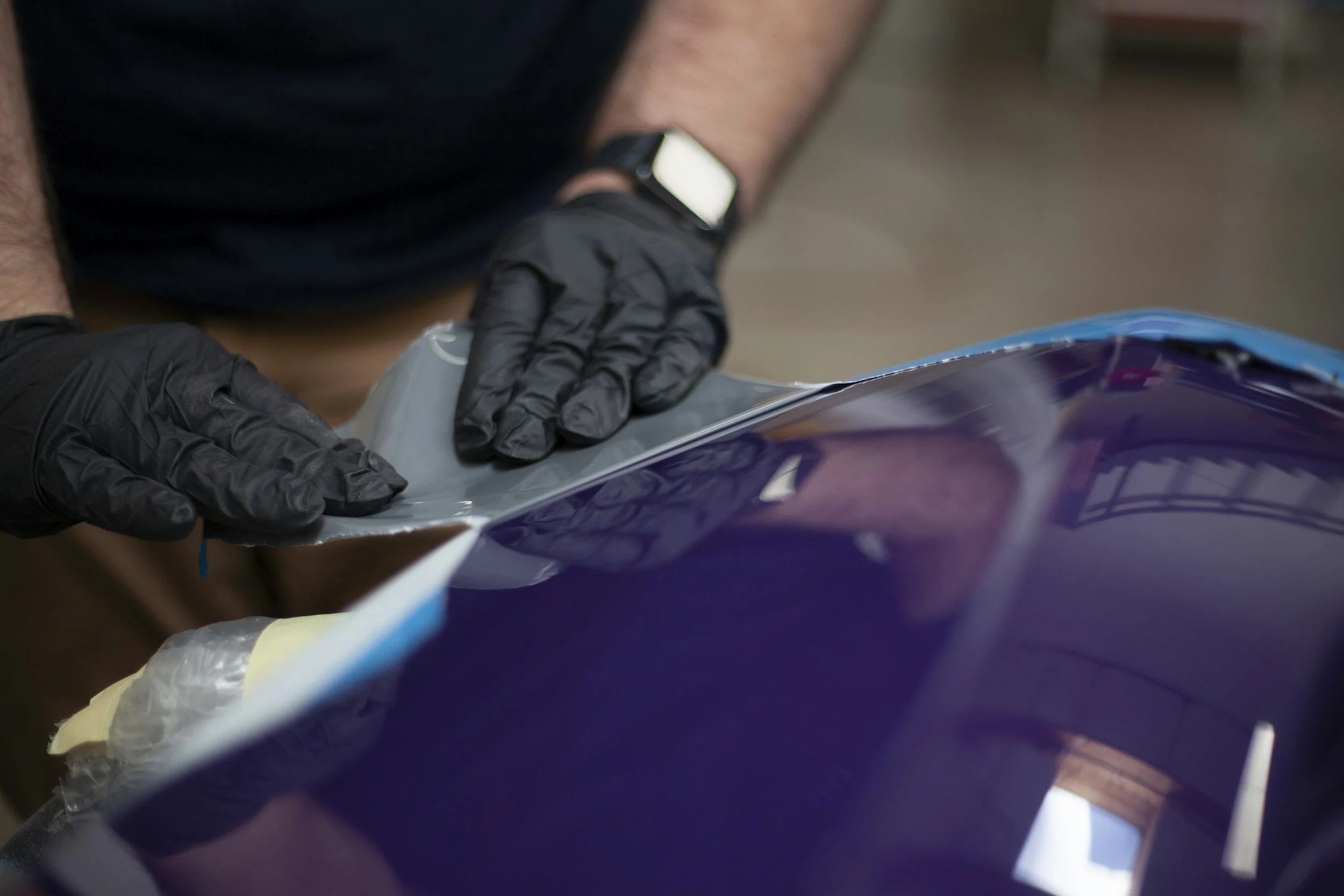
A ceramic coating on tank, fairings and painted panels means bug guts and road film rinse off instead of etching in — which, if you ride canyons, is the difference between a five-minute wipe-down and a paint correction next spring. Coatings also work well on wheels, where brake dust is the enemy, and on exhaust.
For riders who don't want a full coating, a quality sealant on the paint plus wheel protection covers most of the practical benefit.
Pre-storage and pre-sale
Before winter storage: get the road salt, brine, bug residue and chain fling off, protect everything, and treat the leather. A bike stored clean and protected is worth noticeably more in spring than one that sat dirty.
Before selling: motorcycles sell on presentation more than almost any vehicle. Buyers read a clean bike as a maintained bike. This is the highest-return detail in the category.
Vintage and custom bikes
We are careful with older bikes, and we ask first. Original paint, hand-pinstriping, patina, delicate decals, and unusual finishes all need a conversation before anyone touches them with a machine. If you have something rare or original, tell us — we would rather do less than do damage.
Frequently Asked Questions
-
No. Pressure washing forces water past wheel, fork and swingarm seals and into electrical connectors, and it strips chain lubricant. Everything is done by hand with controlled rinse.
-
A maintenance detail is typically half a day. A full detail with paint correction, chrome work and engine case cleaning on a cruiser or vintage bike can be a full day or more.
-
Light surface pitting often improves significantly with dedicated chrome work. Once pitting is through the plating, no polish will fix it — that needs re-chroming.
-
Yes, if you want us to. Some riders prefer to handle their own chain maintenance, which is fine — just tell us.
-
If you ride canyons, it is one of the better values available, because bug etching is the main thing degrading motorcycle paint here and a coating largely solves it.