
Car Headliner Cleaning in Fort Collins, CO
The headliner is the surface most detail shops quietly avoid, and there is a good reason for that: it is the easiest thing in the interior to permanently ruin.
If you have looked up a headliner cleaning tutorial, you have probably seen advice to spray it with upholstery cleaner and scrub. Do that and there is a real chance you end up with a sagging, bubbled headliner and a much larger bill than the one you were trying to avoid.
Why headliners are different
A headliner is not upholstery attached to a frame. It is a fiberglass or pressed-fiber board, with a thin foam layer, with fabric glued to the foam. Three layers, held together by adhesive.
Two failure modes:
The adhesive is water-soluble. Saturate the fabric and the moisture reaches the glue. The glue releases. The fabric separates from the board and hangs down in a bubble or a sag. This is irreversible without replacing or re-covering the headliner.
The foam degrades. In older vehicles the foam layer breaks down into powder on its own — that is the classic droopy headliner in a 15-year-old car. If the foam has already started to fail, cleaning can finish the job. On a vehicle like that, we will tell you the headliner is at end of life before we touch it.
Colorado's heat cycling accelerates both. A car parked in summer sun reaches interior temperatures that stress the adhesive repeatedly, which is why headliner failure shows up earlier here than in mild climates.
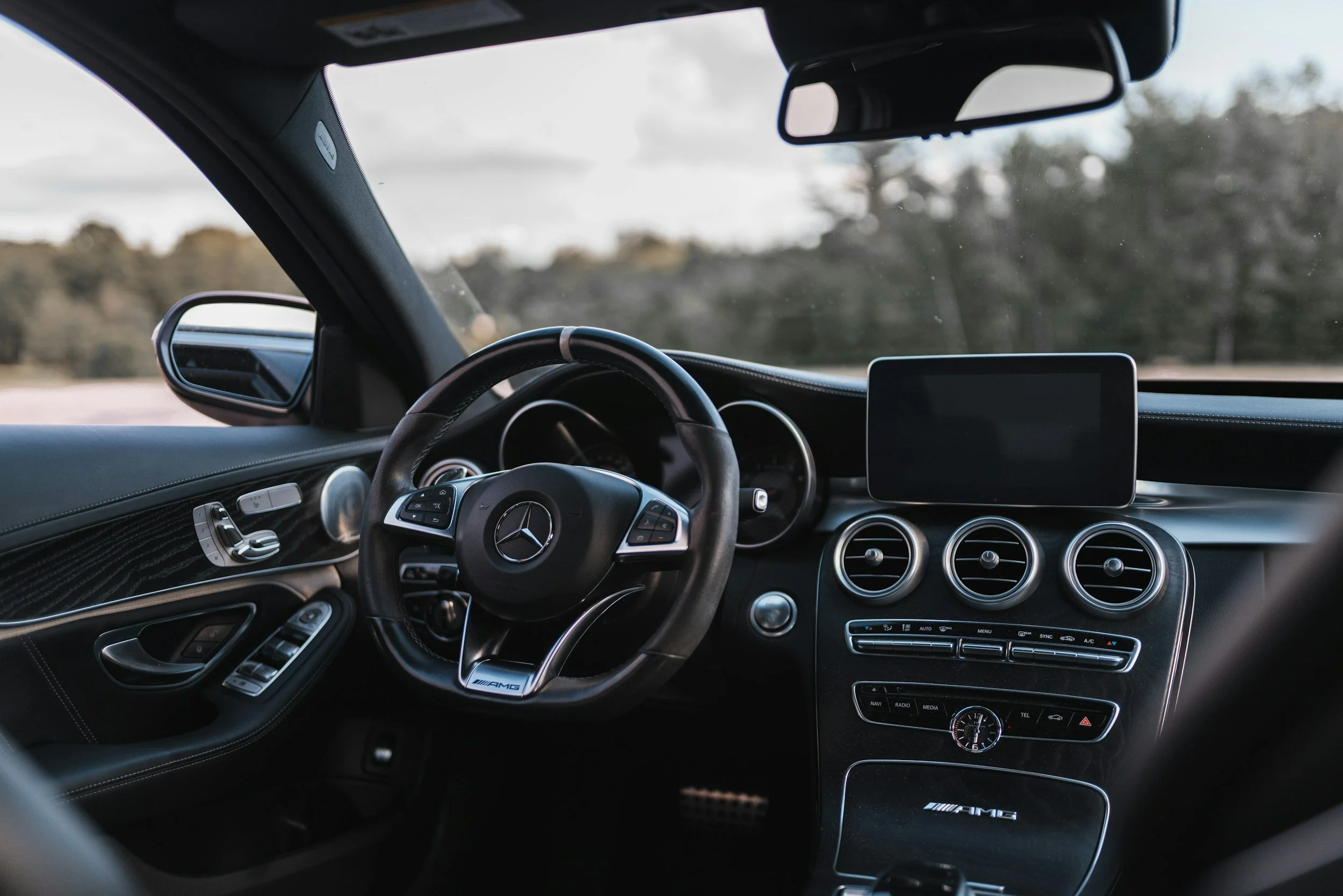
The other reason it's hard
Headliners are almost always light-colored — gray, beige, off-white — and they are the largest single continuous surface in the interior. That means there is nowhere to hide a mistake. Clean one section too aggressively and you get a clean patch surrounded by a dingy field, which looks worse than the original stain. Overwet a spot and you get a water ring.
Getting a headliner to look right means working the whole panel evenly, not spot-treating.
How we do it
Minimal moisture, always. The governing principle is that the fabric gets damp and the foam behind it does not. That means product applied to the towel or applicator rather than sprayed heavily into the fabric, and it means resisting the temptation to keep adding cleaner when a stain resists.
Dry methods first. A surprising amount of headliner soiling — dust, cigarette film, general grime — responds to careful vacuuming with a soft brush attachment and dry compound techniques before any liquid is involved.
Light foaming cleaner, worked and lifted. Where liquid is needed, we use a low-moisture foaming product with a soft applicator, worked gently in one direction, and immediately lifted with a dry microfiber. The dirt comes off on the towel rather than being driven deeper.
Panel-wide, even coverage. We work the whole headliner rather than dabbing at one stain, so the finished result is uniform.
Airflow to dry. Immediate forced air so nothing sits damp against the adhesive. Colorado's dry air is genuinely helpful here.
Around the fixtures. Dome lights, sun visors, grab handles, sunroof surround, and the pillar trim edges all need attention and all need care — visor hinges and the sunroof seal are common places for water to run in.
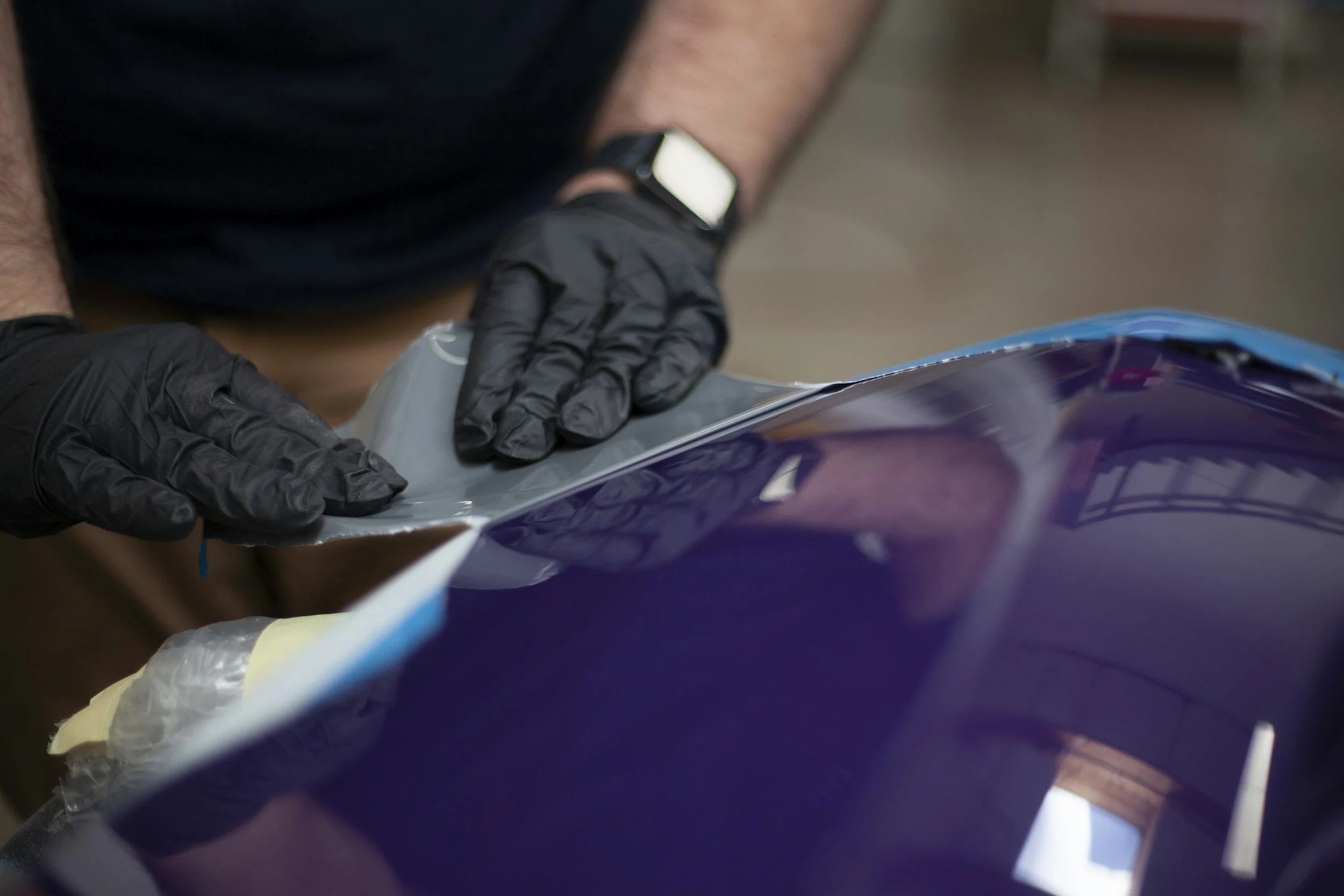
What we can and can't fix
Usually comes out: general grime and hand marks, dust and dander, cigarette and vape film (this is the big one — smoke saturates headliners and it is most of the reason a smoked-in car smells), light food and drink splatter, hair product marks, and the dark grime around grab handles and visors.
Sometimes comes out: older set-in stains, coffee or soda splash that has been there for years, water stains from a sunroof leak.
Doesn't come out: anything where the fabric is stained through to the foam, permanent marker, mildew that has grown into the foam layer, sun-bleached fading, and burns. Also — importantly — an existing sag will not be improved by cleaning. If the adhesive has already released, the headliner needs re-covering, and cleaning it first is throwing money away.
Water stains from a leak are worth flagging separately. If you have a brown ring in the headliner, you have or had a water leak — usually a plugged sunroof drain tube or a failing windshield seal. We will clean the stain as far as it goes, but tell you where the water is coming from, because otherwise it comes back.
Why people pay for this
Three reasons come up over and over.
Removing smoke odor. You cannot get cigarette smell out of a car without dealing with the headliner. It is the largest absorbent surface in the cabin and it holds the tar film. This is why ozone treatments fail on smoked-in cars where the headliner was skipped.
Selling or returning a lease. A grimy headliner is one of the first things a lease inspector notes and one of the things buyers notice without knowing why the car feels tired.
Because nobody else would do it. Genuinely a common reason. Plenty of shops will not touch a headliner because of the risk, so if you have been told no, that is why.
We will look at yours and tell you honestly whether it should be cleaned, left alone, or replaced.
Frequently Asked Questions
-
Not the way we do it. Sagging happens when the fabric is saturated and moisture reaches the water-soluble adhesive. The entire method is built around keeping the foam layer dry.
-
No — that is an adhesive failure, not a cleaning problem, and it needs re-covering or replacement. Cleaning it won't help and we'll tell you that rather than take the job.
-
Usually a large improvement, sometimes completely. On a vehicle smoked in heavily for many years, some odor may remain in the foam and the honest answer is that replacement is the only complete fix.
-
That is a water stain, which means you have a leak — most often a plugged sunroof drain. We'll clean it and point you at the source, because it will return otherwise.
-
You can, and the most common outcome of DIY headliner cleaning is a sag or a water ring. If you try, use almost no moisture and never scrub.